Low spots and dips
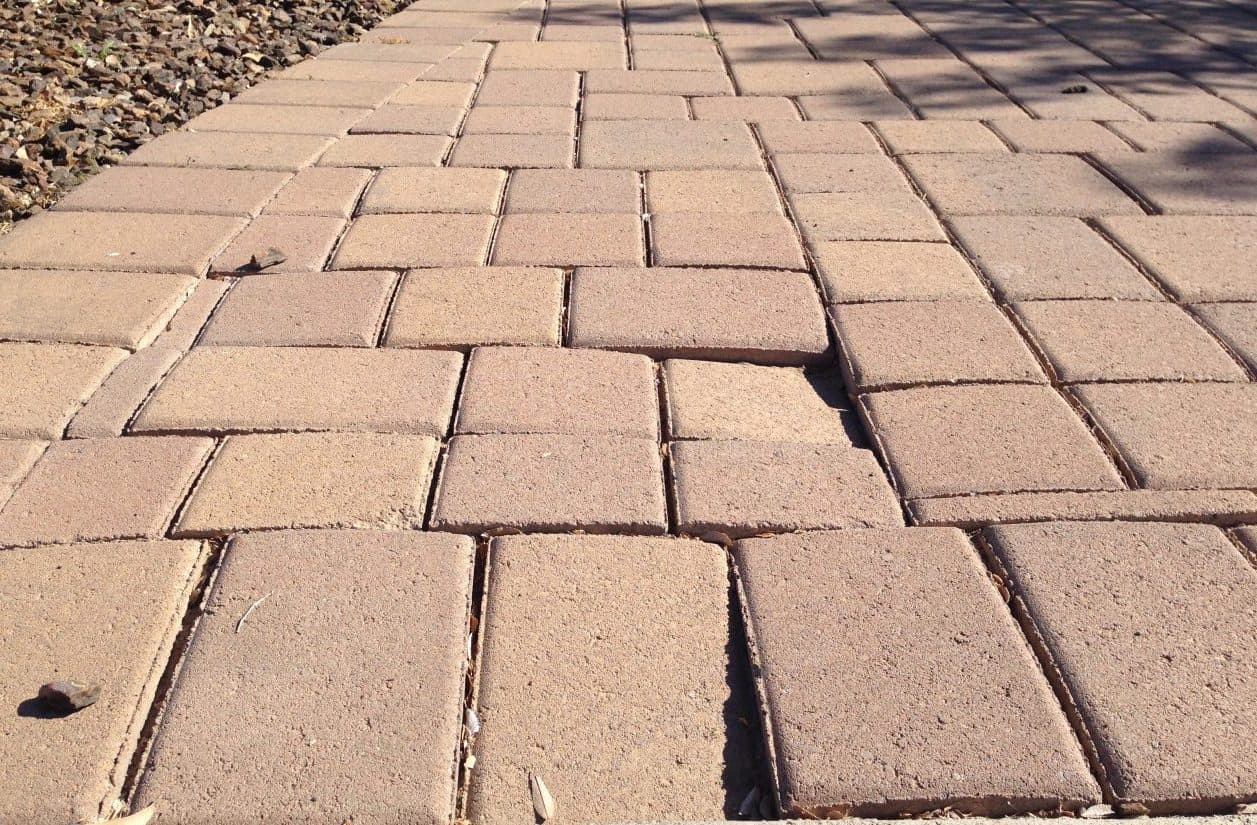
Pavers have settled below the surrounding surface or collect dirt and water.

Sinking & uneven pavers
We lift and reuse sound pavers, rebuild the failed area beneath them and restore a safer, cleaner grade.
Fix the cause beneath the surface
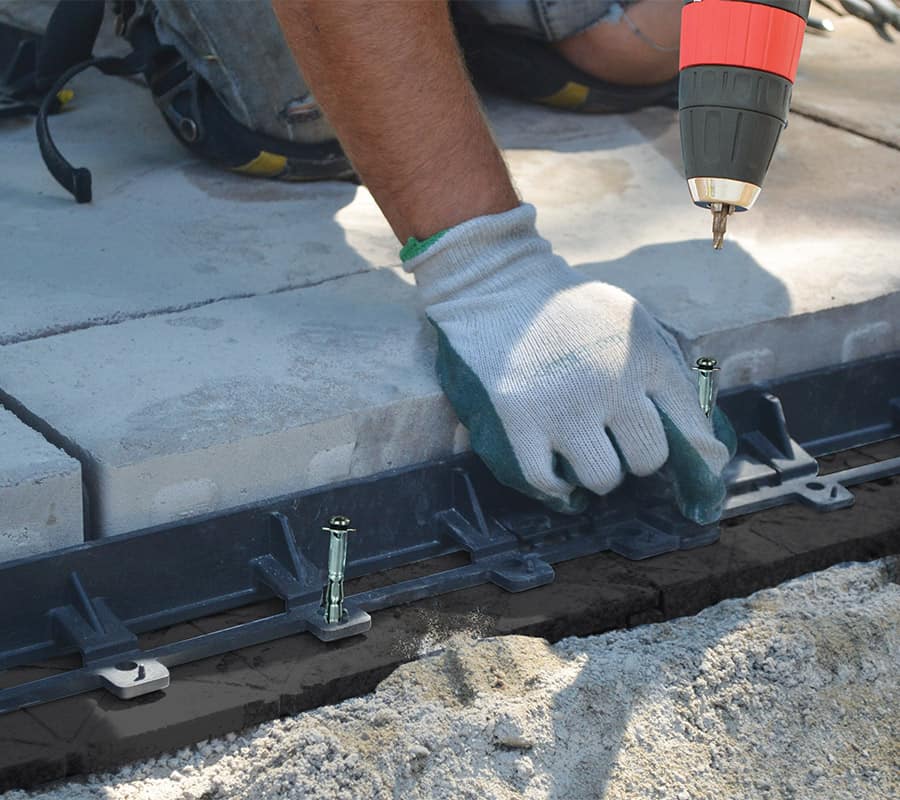
Interlock can sink when the base loses support, water moves material beneath the surface, or the edge restraint no longer holds the installation in place.
A focused repair starts by lifting the affected pavers and identifying why the area moved. Once the support and grade are corrected, sound pavers can be relaid into the original pattern.
Ask about your repairWhat to look for
A visible change in the surface can point to a problem with support, restraint or drainage beneath it.
Pavers have settled below the surrounding surface or collect dirt and water.
Pavers spread or rotate because the edge restraint has shifted or failed.
The surface directs runoff toward the foundation instead of away from it.
Adjacent pavers sit at different heights and create an uneven walking surface.
The repair process
Every repair begins with the condition beneath the surface—not with a coating or cosmetic shortcut.
Check the pattern of settlement, drainage direction, joints and edge support.
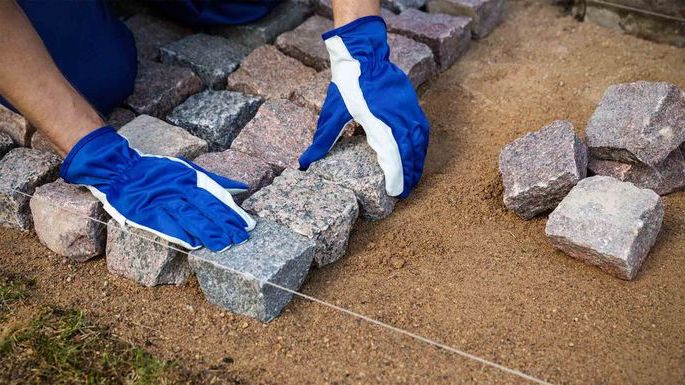
Remove sound units carefully so they can return to the original installation.
Correct the base, compaction, grade or restraint that allowed movement.
Restore the pattern, joint material and transition to the surrounding surface.
Repair-first approach
Because interlock is modular, a settled area can often be repaired without replacing an otherwise sound patio, walkway or driveway.
Common questions
Send photos and a short description if you are unsure which repair applies.
Often, yes. If the units are structurally sound, they can be lifted, stored and relaid after the failed area beneath them is repaired.
Common causes include weak base material, poor compaction, water movement, incorrect grading and failed edge restraints. The visible dip does not always identify the cause by itself.
Joint sand fills the spaces between pavers; it does not rebuild support beneath a settled area. Sinking pavers normally need to be lifted so the base can be corrected.
A focused repair is often possible when the surrounding installation remains stable. The appropriate scope depends on how far the underlying failure extends.
Keep the pavers. Fix the problem.